



|
|
|
POSITANO - AMALFI COAST - CAMPANIA - SOUTH ITALY VISIT & SEE SHOPPING & SOUVENIRS FOOD & WINE HISTORY Positano and the Amalfi Coast are some of the most important visiting tourist resort of the South Italy, attracting many visitors every year from worldwide nations like United States, Japan & Europe. 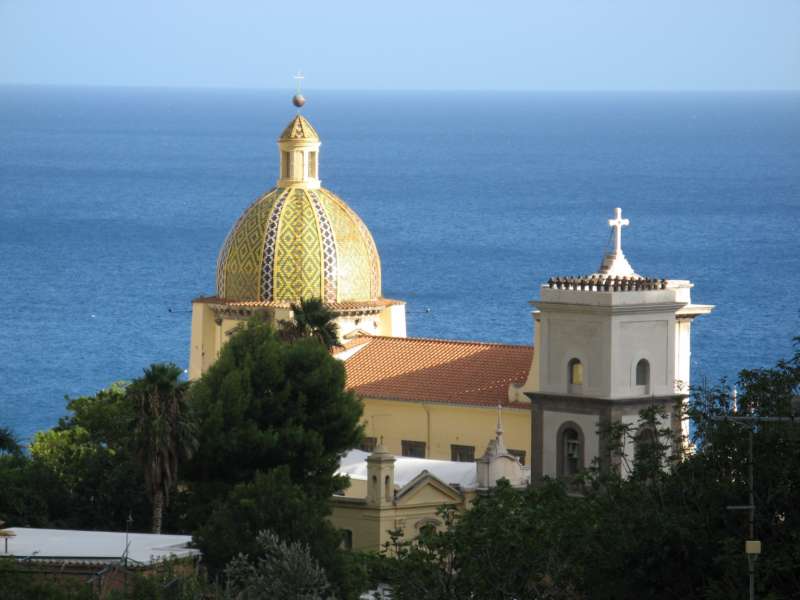
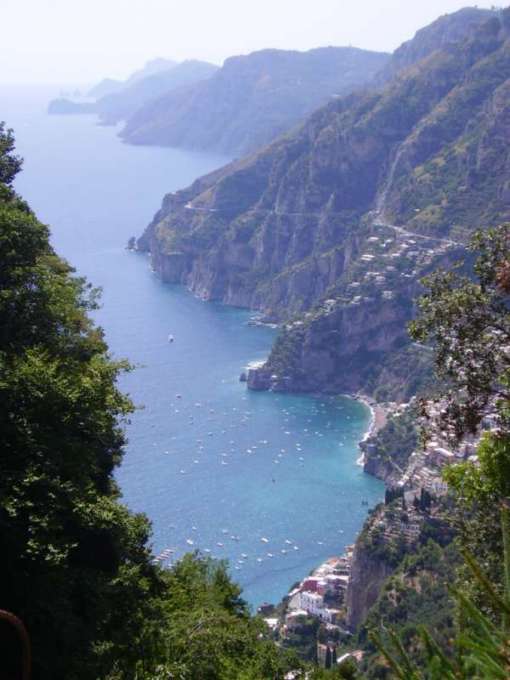
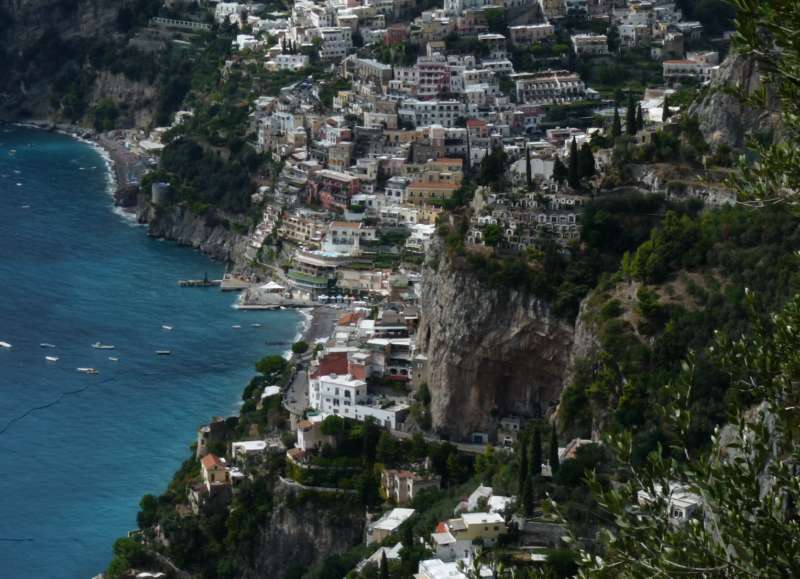
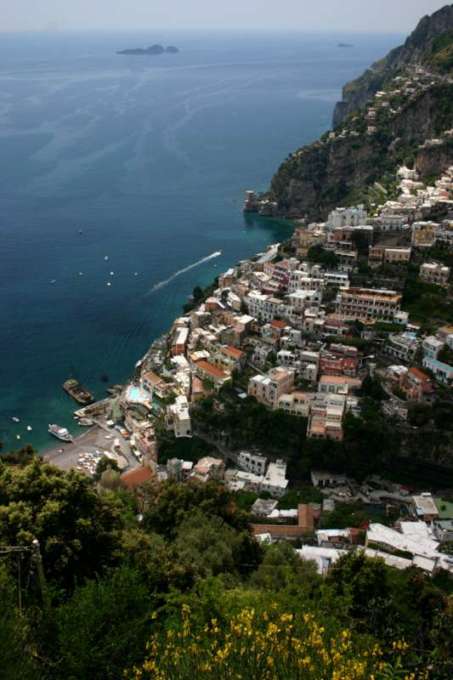
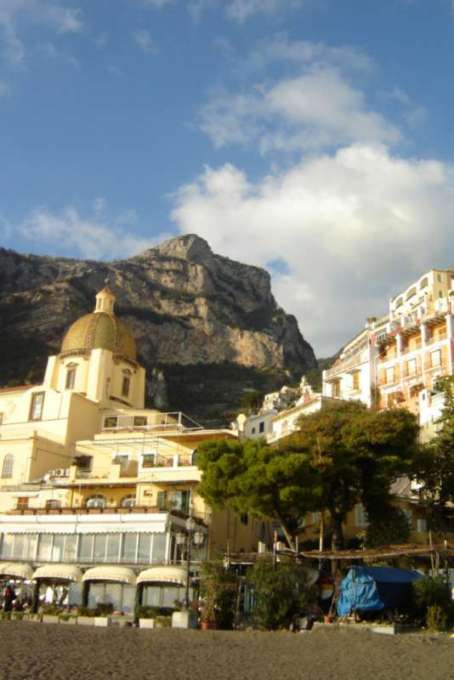
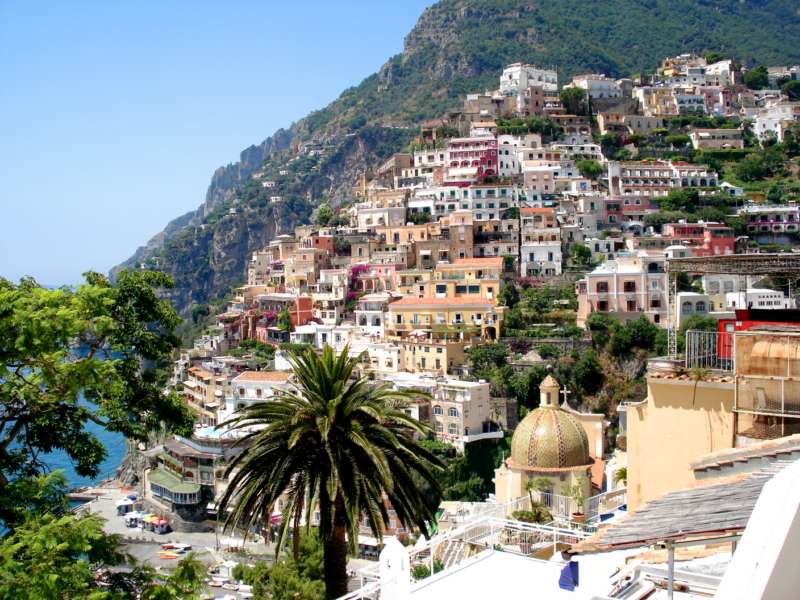
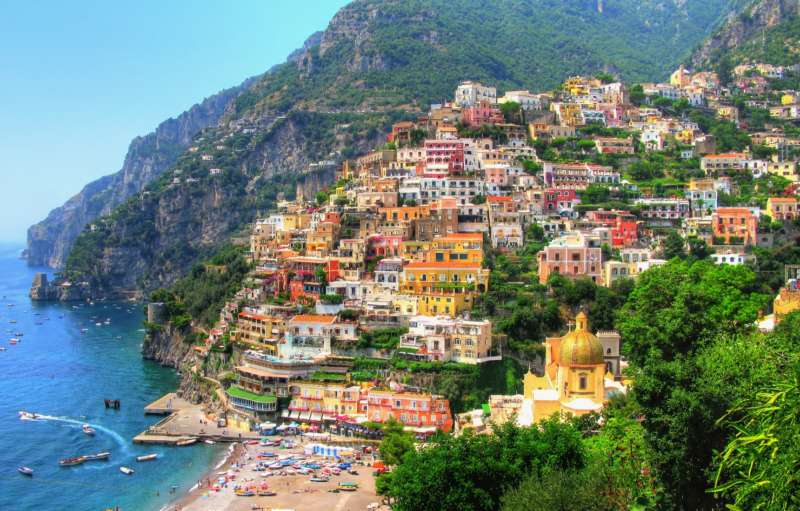
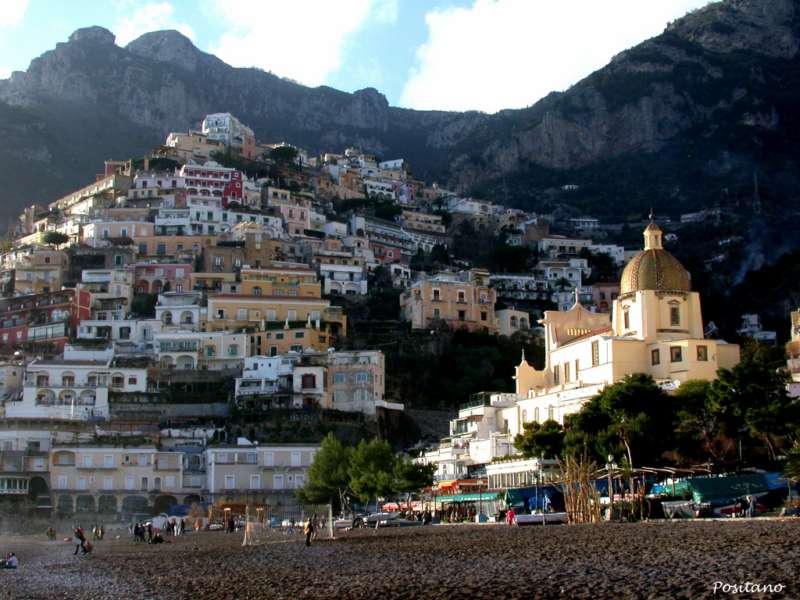
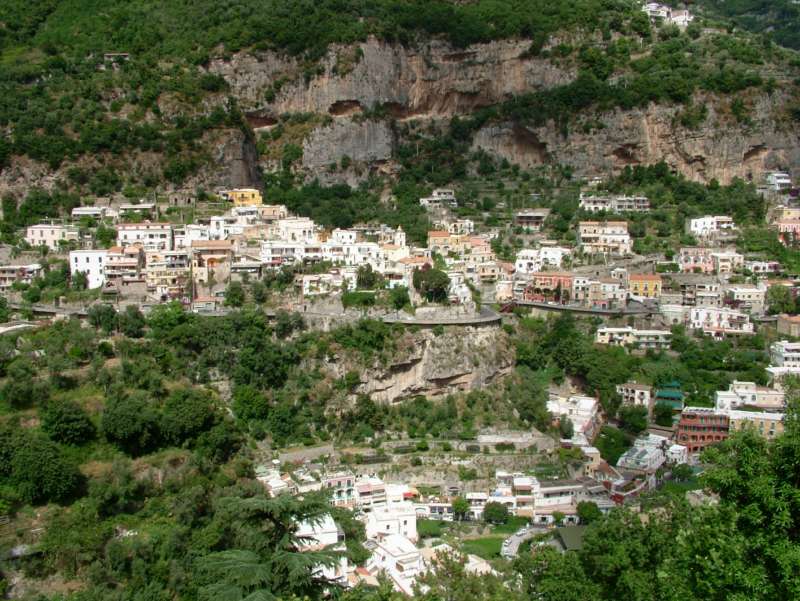
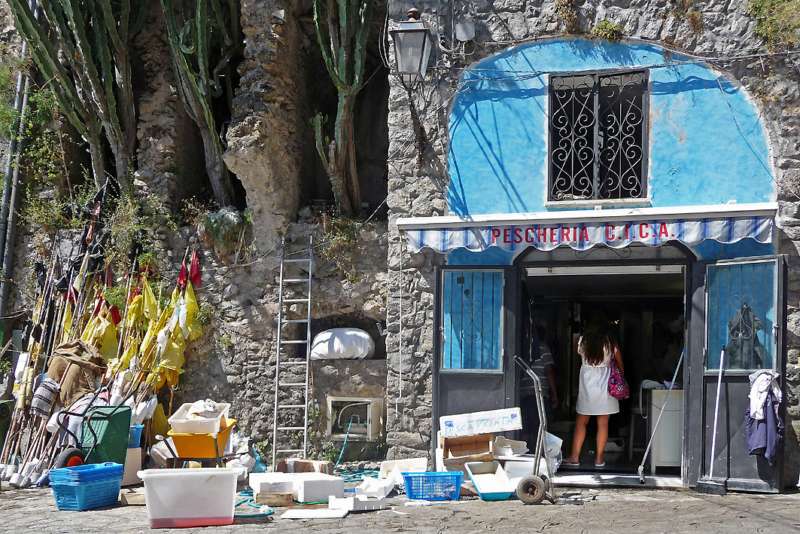
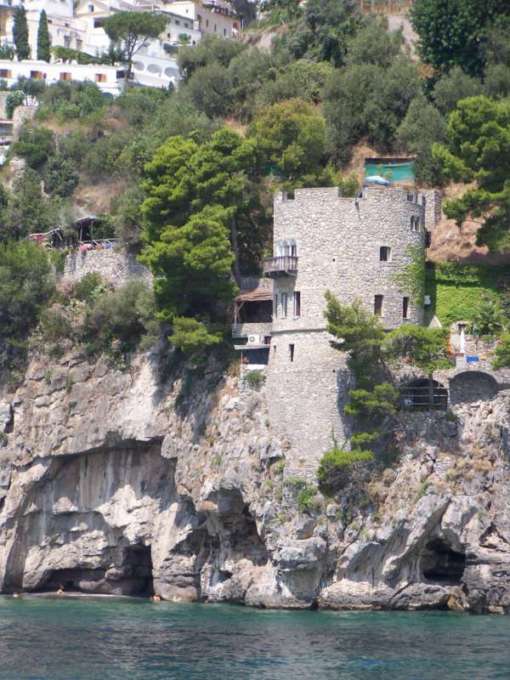

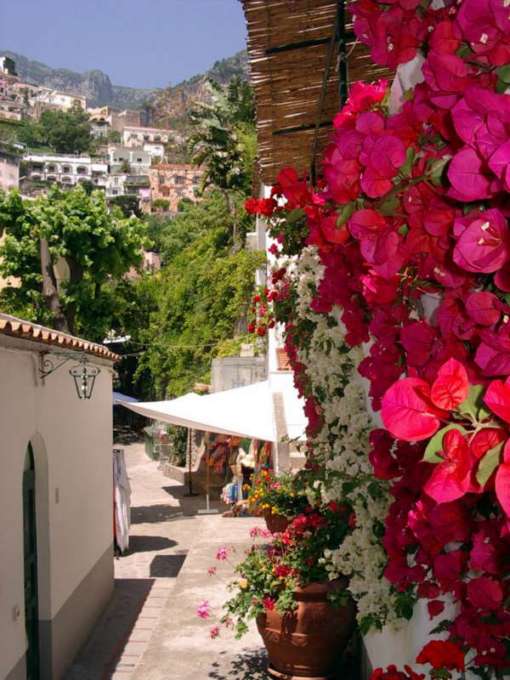
The Beauty of this picturesque town set in in a splendid panoramic position on the most famous and world known Amalfi Coast, is stunning and fascinates each visitor. Between sky and sea a mirage of colours...the yellow boats that seem to take their colour from Positano's Mother Church dome, the broom flowers, the chubby "Fichi d'India" plants that grow in the luxurious gardens and merge into the intense Blue of the sky, with it's white clouds, White like the houses of Fornillo, a Byzantine dome set on the rocks. "When you have discovered Positano the impulse is to keep it a secret, just for you ..." writes Mr J. Steinbeck. Once a sleepy little fishing village then the secret of painters and writers, its "fatal gift of beauty" has been discovered. According to history Positano was founded by the inhabitants of the near by "Paestum" around a Benedictine Abbey dedicated to S.Vito built before the 10th century, after their town had been destroyed by the Saracens. It turned into a small maritime village, that finally became holiday resort for the noblest and richest Roman class that were attracted by it's mild climate and it's beautiful location. Positano, that features all the characters of a southern italian antique town with it's always elegant and colourful narrow alleys, has kept in time its nature of elite tourist resort since the 19th century becoming the favourite destination for great artists such as Pablo Picasso and Paul Klee, and illustrious personages of culture such as Rossellini, Toscanini, Bernstein, Steinbeck and Pirandello. Made up of three outlying wards, its greatest attractions remain the Town and the Sea-suburb. The Town is embroidered by the narrow and often winding lanes and steps which cross it and is dominated by the splendid dome covered in polychrome majolica of the church of "S.Maria Assunta". Here you will find the typical "piazzetta" and cafe ideal for meeting up with friends and family or even just to get to know other people in a friendly, calm and relaxed atmosphere. Among the delightful white or pastel-coloured houses, with their typical cubic shape and the green of the luxuriant gardens, stands the parish church of Santa Maria Assunta, with its splendid majolica dome. Steep steps descend on the mountain side from the town leading to the bay that hosts the characteristic white houses with the spherical cover and the front-small colonnade. Just offshore lay the Galli Islands as legend says, they where the home of mermaids, who lured sailors to their doom. Considered one of the best-equipped and exclusive tourist resorts in Italy, also famed for its flourishing fashion tailors, Positano perfectly combines the beauty of its natural surroundings and numerous beaches, Marina Grande, Ciumicello, La Porta, Arienzo e Fornillo, with the fascination of its ancient fishing port and the charm of its steps and lanes crowded with quaint colourful shops. The small Piazza Flavio Gioia, in the centre of Positano, hosts the parish church of Santa Maria Assunta. The building with its large majolica-mosaic dome, contains important works of art, outstanding are the Circumcision, a stupendous work by Fabrizio Santafede, from the end of the sixteenth century, and a delightful thirteenth-century Byzantine-style panel depicting the Virgin and Child. According to popular tradition, the origin of the town's name is linked to this very icon: looted by the Saracens, the precious panel was brought back to land following a storm, while a prodigious cry "posa, posa" (put it here) was heard from the shore. Having given back the ill-gotten icon, the sea calmed down, so a church was built in honour of the Virgin on that spot and the town grew around it, that took the name of Positano. Very interesting are also the St. James and St. Margaret churches. The bell tower is also very interesting with a medieval bas-relief portraying a sea monster, some fish and a fox, probably to underline the dual nature of the coastal inhabitants' souls, half countrymen and half seamen. Numerous trips are organized in town to Belvedere, Sciaccone, Ponte dei Libri, Grotta Matera and Marina Grande, to the picturesque beaches of Fornillo, La Porta, Arienzo and Ciumicello, to Grotta della Porta (Porta Grotto). Quality fashion tailoring is something that has distinguished Positano since the end of the 50's when, with the creation of the bikini, innovative swimming costume, the town on the Amalfi coast became famous in Italy and throughout the world. Nowadays production is wide ranging and offers a great variety of clothing: including typical garments for the seaside, wraparound skirts, beach robes, bags and Bermudas, to the more formal afternoon clothes or elegant evening dress and even very special wedding dresses. Bright, cheerful patterns, brilliant colours and the use of absolutely natural materials, linen, gauze or cotton, characterise Positano fashion. After a phase in the 1950s and 60's, in which Hawaiian-inspired designs predominated, during the 70's plain-coloured gauze took over, instead today, patterns that portray Mediterranean plants prevail, lemons, flowers and leaves, "borrowed" from the luxuriant natural surroundings. Pleasant little shops cheer the lanes of the centre and are a must for the many tourists who come to the town all the year round. Apart from its skilled tailors, Positano is outstanding for its famous cobblers, able to create the typical Positano sandals hand-made to measure while you wait in front of the shop: with names like "spider", "monk", flipflops, wooden or cork clogs and the very comfortable canvas mules, with string soles. Positano cuisine offers a series of tasty specialities, some linked to typical seafood traditions, others to country cookery. Among the most typical recipes should be mentioned the tasty spaghetti with clams, dressed only with olive oil, naturally locally produced and extra-virgin, and parsley, without tomatoes. The delicious fish soup, the appetising fried anchovies, dressed with mint, vinegar and garlic, the delicate swordfish roulades; stewed octopus cooked in earthenware with tomatoes from S. Marzano, or boiled or indeed raw and mussels in black pepper. For those who prefer meat, the rich grills over charcoal are delicious, a typical dish of the area, accompanied by exquisite vegetables, prepared in a great variety of ways. The dairy products are phenomenal, especially the mozzarella cheeses, to be enjoyed as they are or as by a local recipe roasted on lemon leaves. Moreover, Positano is well-known, like the other towns along the coast, for its long tradition of confectionery: among the dainties should be mentioned the lemon delights, that are outstanding hereabouts for their excellent quality and extraordinary sweetness, and the Positano cake, the "babarese", a rolled baba pastry filled with cream and wild strawberries, and the original puff pastry without ricotta. All washed down with excellent liqueurs, prepared to ancient recipes, based on the aromatic local citrus fruits, or wild strawberries, wild bilberries, roses, laurel, prickly pears, fennel and walnuts. It is one of most elegant and well-known health-resorts of the Amalfi Coast and seems to be founded (the tradition is confirmed by historical searches) by the fugitives of Paestum, escaped from the Saracens. About the first inhabited centre some news were known already in the tenth century: it was a suburb, where was located a Benedictine Abbey dedicated to St. Vito. It seems probable, however, that the zone had been populated by the Picentini, who, rebelled against Rome and by it defeated, in 290 b.C. were deported to that area, as reported by the ancient historian Strabone. The townspeople of Positano, vassals of Cava Abbey during the Middle Ages, freed themselves and gave up to the navigation, becoming able to compete also with the same Amalfi. Positano's territory preserves traces of very ancient settlement, already evident in the Palaeolithic period, as testified by remains found in the grotto named La Porta, not far from the town, but also Roman remains, such as those of a large villa, visible close to the parish church. You may consider staying in the area between Maratea and Diamante central to the whole of the South Italy, so please check the availability below and book a Hotel accommodation by the sea or in the beutiful rural area and center point for other major South Italy destinations within a few hours of relaxing, discovering car drive. Distances to the Amalfi Coast approx. Check Hotel Accommodation availability and book in these towns:
|
||||||||||||||||||||