



|
|
|
PAESTUM - CAMPANIA - SOUTH ITALY It is always a difficult task to write down the historical background of Paestum, even a short one. In our opinion, it is a duty and an exclusive matter for archaeologists and scholars; for tourists we try to expose at least the general outlines of it. 
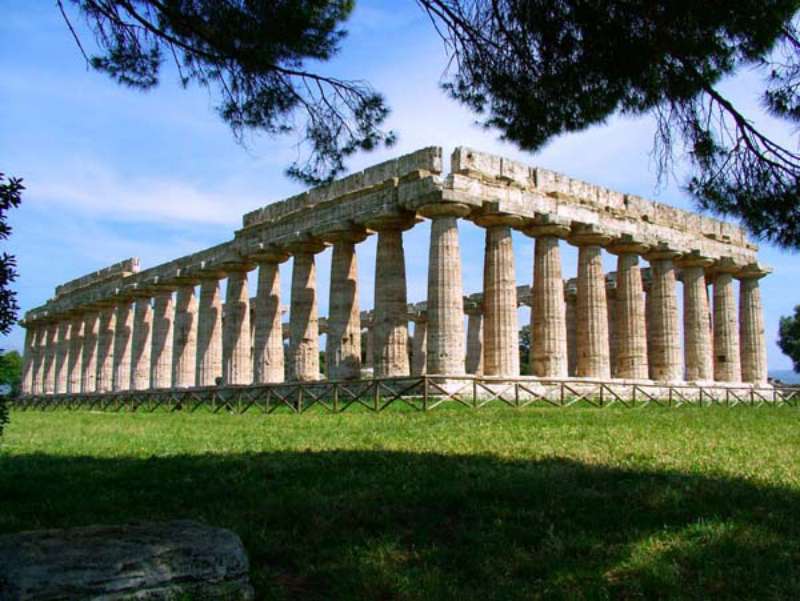
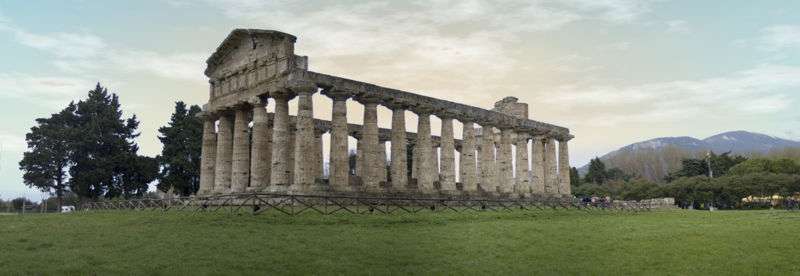
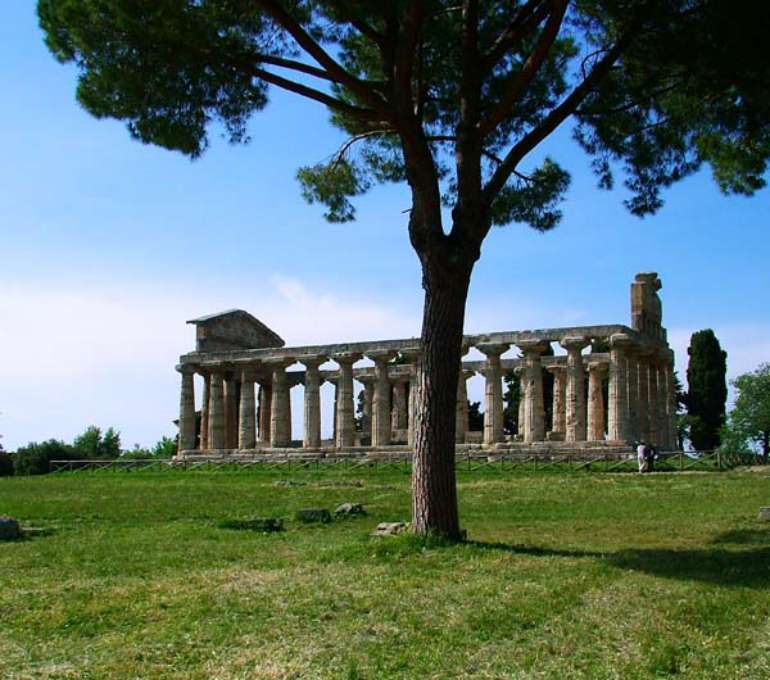
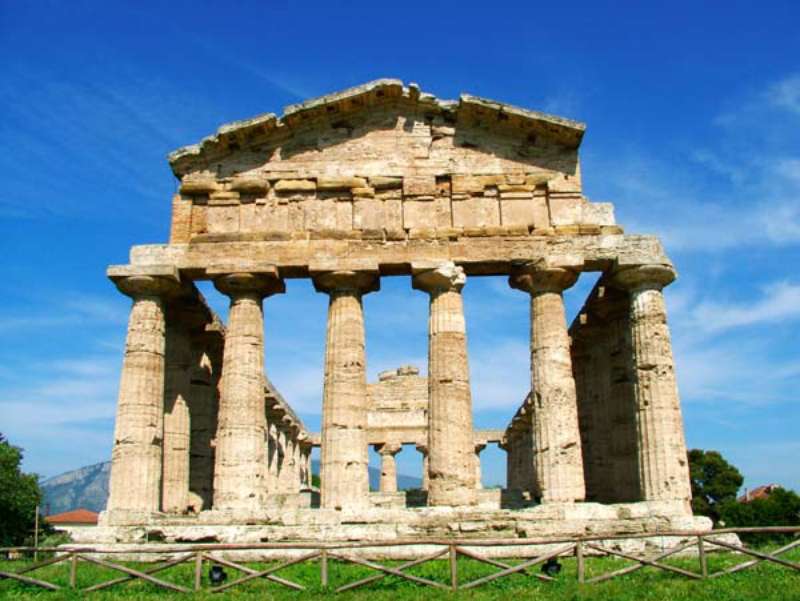
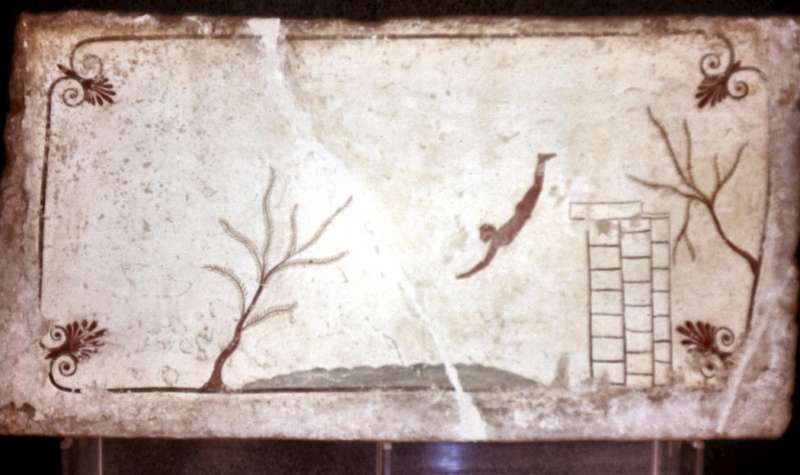
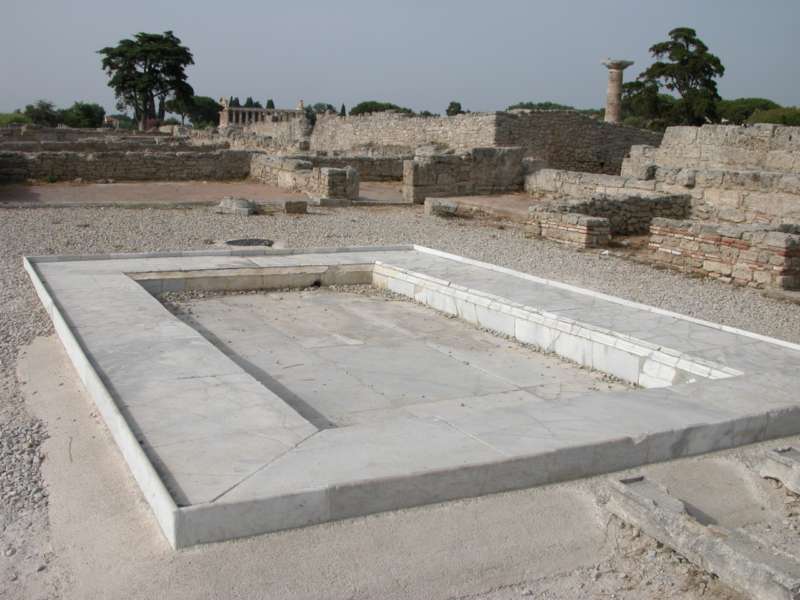
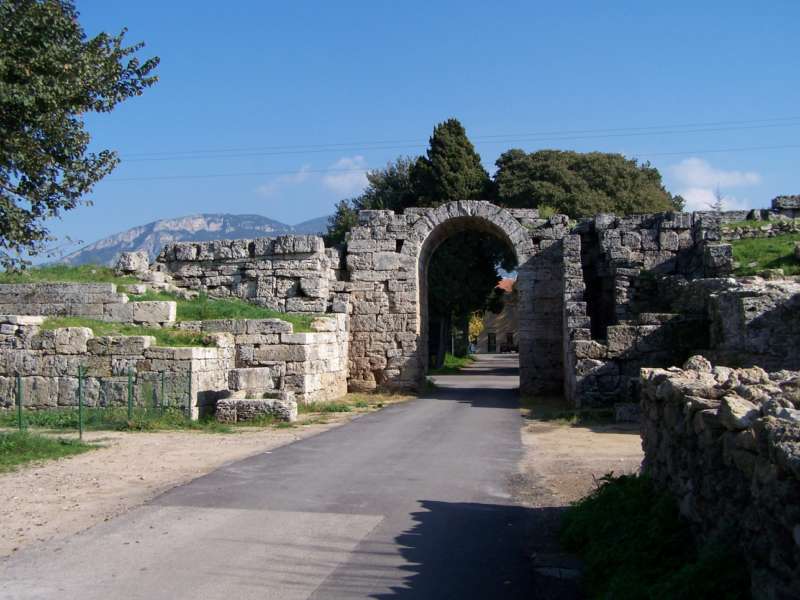
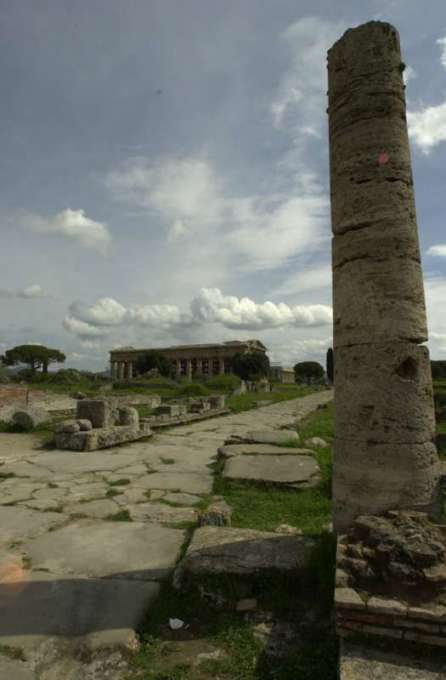
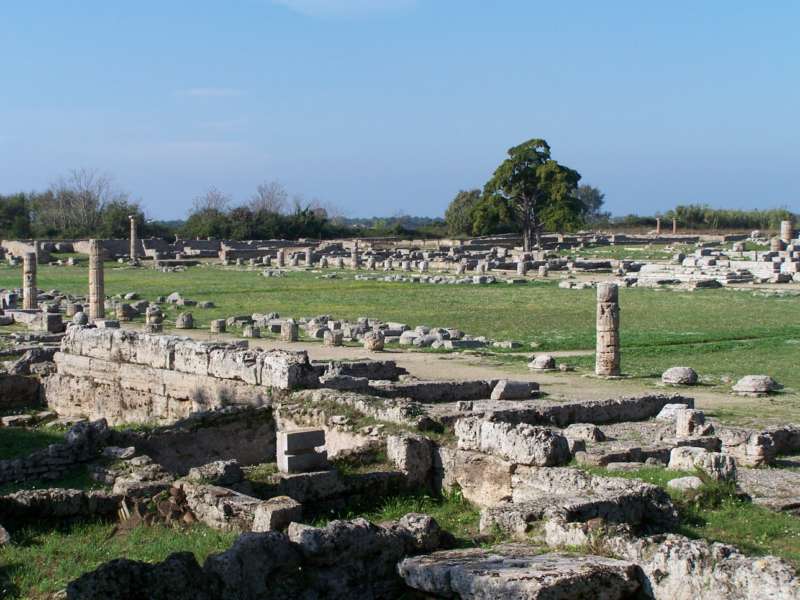
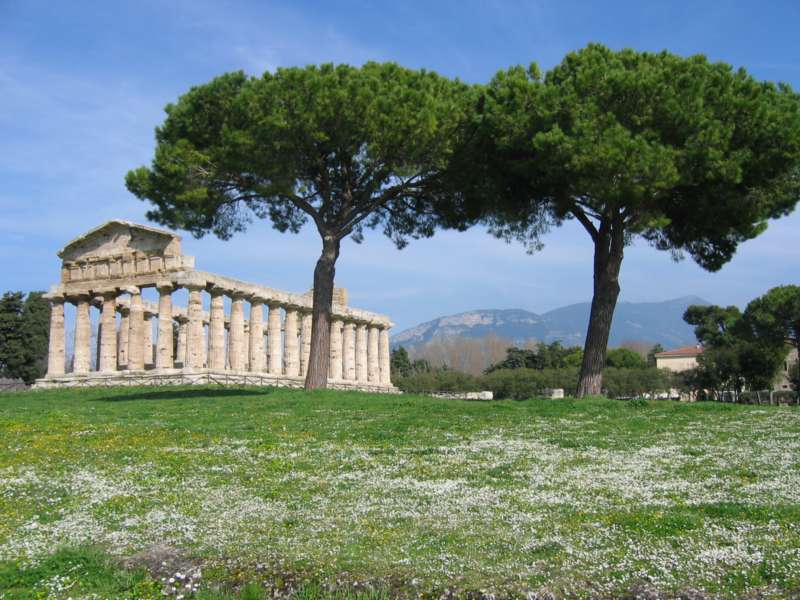
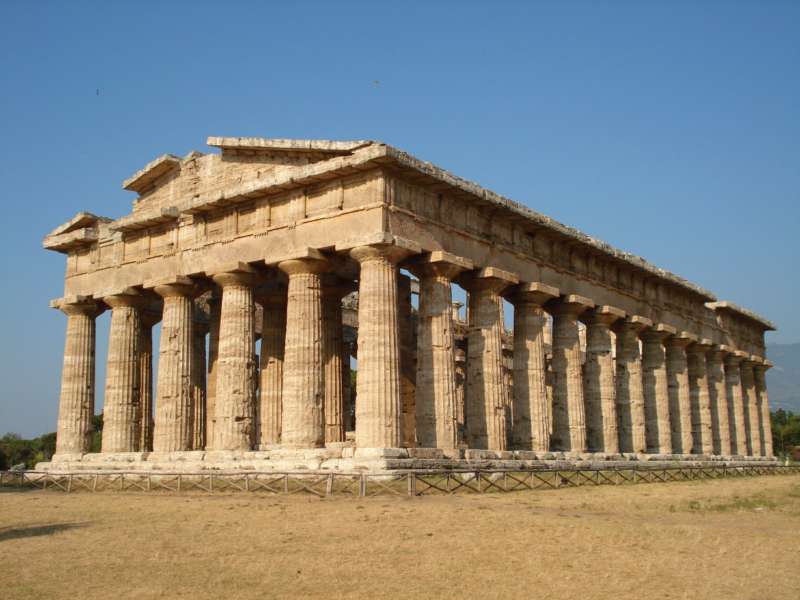
In about 600 B.C. the Greek, perhaps having already explored the plain and having assured themselves a fortified place near the sea, founded a city there which they called Poseidonia in honour to the god of the Sea. At the same time, northwards, the inhabitants of Poseidonia built a sanctuary (the Hearon) near the mouth of the Sele, not only to honour their goddess Hera from Argo, but probably as defensive strategy against the Etruscans. The latter had settled on the other side of the river and being a powerful and advanced people they represented a danger for them. This sanctuary became famous all over the Greek world, so that it became part of mythology and, as Strabone writes, its construction was attributed to Jason and his Argonauts. Defended by its imposing and continuously reinforced walls (nowadays the best preserved of ancient times) with four gates at the cardinal points and thanks to its geographical position - close to tradeways -, to the water courses and to the fertile lands, Poseidonia soon reached a high degree of richness and of artistic and cultural fervour which in a century lead to the construction of three magnificent Doric temples, an incomparable inheritance from Greek civilization. The magnificence of this colony lead the Lucans - an Italic inland people - to try to conquer it. In about 400 B.C. they occupied it and changed its name in Paistom. There the Lucans continued their civil and military activities for a long time, save for a short time as the Greeks of Italy defeated them under the guide of Alexander the Molossian Alexander the Great's uncle- in a battle near Poseidonia in 332 B.C.. In 326 B. C. they regained it after the battle of Pandosia where Alexander died. In the meanwhile another power was extending itself along the Peninsula: Rome. After the war against Pyrrhus in 273 B.C., it became the uncontested master of these regions and founded there a Latin colony giving it the name of Paestum. The Roman Senat always hold that city in great consideration, because during the war against Hannibal they received assistance -above all victuals- from it. The Romans enriched the city with large buildings, among which there are the portico of the Forum, the thermae, the Amphitheatre, and the so-called Tempio della Pace (Temple of Peace). Paestum flourished till the Late Empire. Because of the changed political exigencies of Rome - turned towards the East - an irreversible crisis begun for the city, like for most of the coast centres. Its inhabitants -converted into Christianity- were reduced to a little community and concentrated next to the Ceres Temple. Others fled to the surrounding hills to avoid malaria, that was spreading there, and the incursions of the Saracens. This explains the birth of a town on the hill, which had a very important strategic and commercial role in the Middle Ages, between the 9th and the 13th centuries, especially during Frederic the Second's reign. It almost substituted and assumed the role Paestum had had during the ancient times. The town was named Caput Aquis, because it dominated the rich springs of Capodifiume, former cult see during the Greek and Roman periods; nowadays it is recalled with the name "Capaccio Vecchio" (Old Capaccio) by the local inhabitants. Following its participation at the Baron Conspiracy against the great emperor, Capaccio was besieged by Frederic the Second who stormed and destroyed it in 1246. After its abandoning nobody spoke any more about Paestum for centuries, even if its always solemn temples were still standing amidst the thick vegetation. A little merit for its rediscovery goes to those writers and poets of the 16th and 17th centuries who, quoting its monuments and describing the characteristics of the place, arouse interest and curiosity for Paestum. But the real "rediscovery" started in the first half of the 18th century as writers, poets and artists of various nationalities (among which there were Goethe, Shelley, Canova, Piranesi) began to visit the ruins of the renowned Greek city - a fashion known under the name of "Grand Tour" - and consequently propagated its fame all over Europe. The immediate effect of this phenomenon conditioned all the European culture. It is easy to notice that all the neoclassical architecture has been influenced by the Doric style of the temples of Paestum. This fact has been recently stressed in a show which has travelled from America to Italy under the meaningful title "The Fortune of Paestum". |
||||||||