



|
|
|
ATRANI - AMALFI COAST - CAMPANIA - SOUTH ITALY Atrani and the Amalfi Coast are some of the most important visiting tourist resorts of the South Italy, attracting many visitors every year from worldwide nations like United States, Japan & Europe. 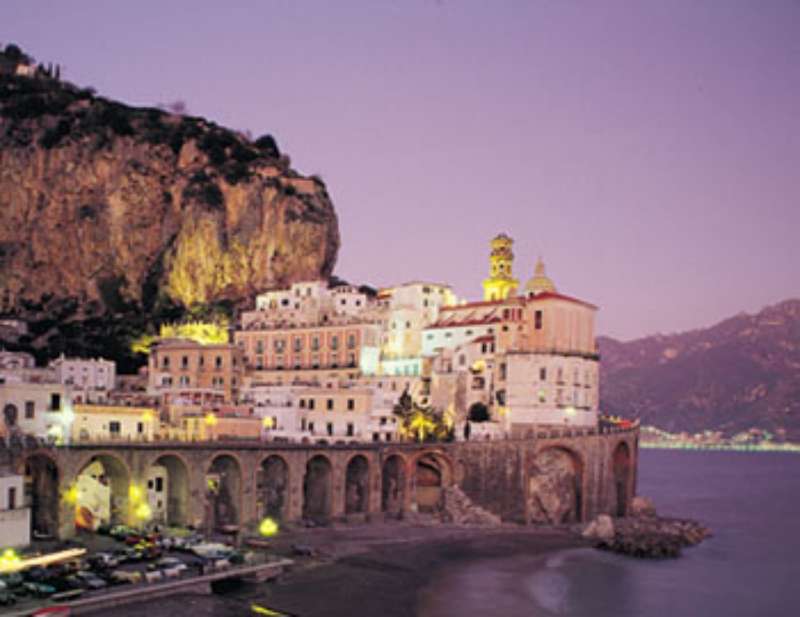
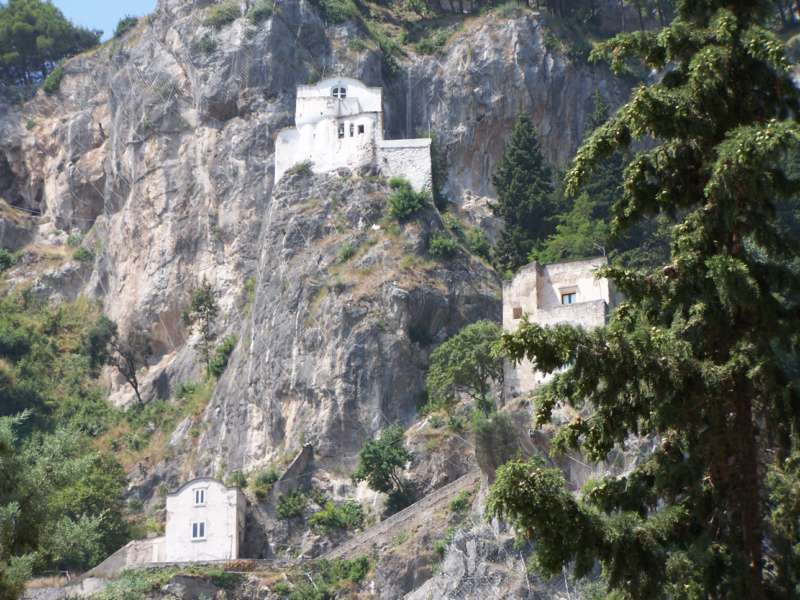
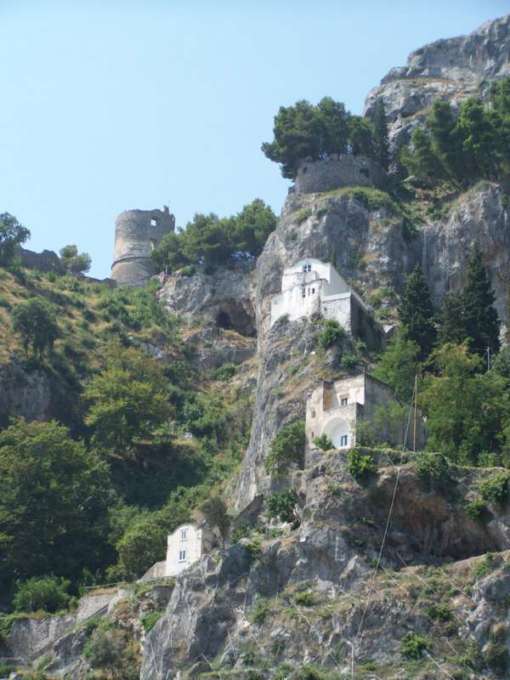
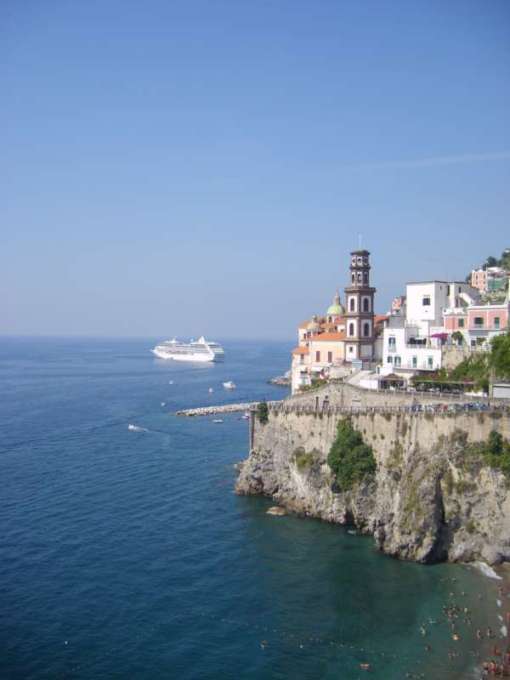
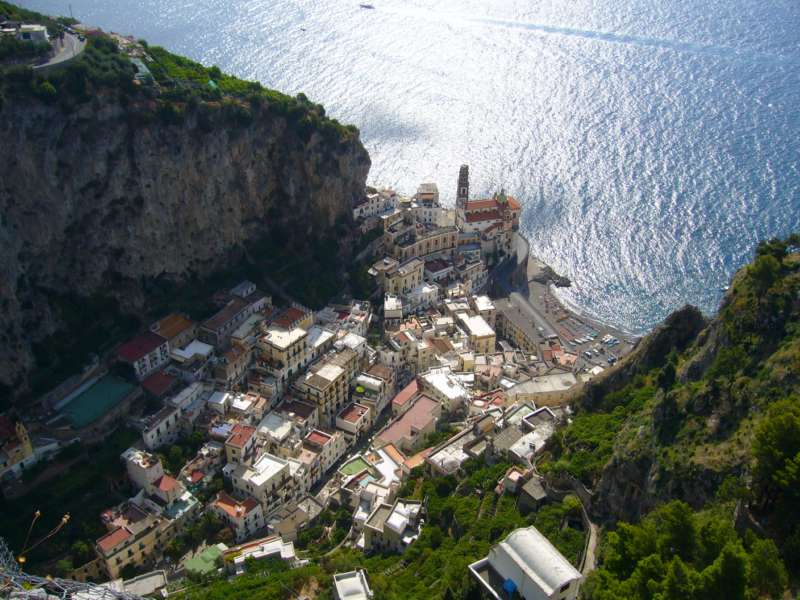
This is one of the most picturesque small towns on the Amalfi Coast, situated at one end of the "Valle del Dragone" and only 700 metres away from the very notorious Amalfi, is probably the only town of this most beautiful rugged coast that managed to keep in time it's antique character of a small fisherman's village. The first houses are situated overlooking the beach, they all meet around the town square, "The Piazzetta", and then rise towards the valley right up to the heights, clinging off the hill and crossed by the great lemon gardens. The Piazzetta is isolated from traffic and surrounded by the flowery balconies of the town's old houses. It only communicates with the beach and the azure blue sea through a passage originally created to bring the boats back in when the tide was high and stormy. The young and confident atmosphere this typical piazzetta enjoys, attracts many visitors who prefer its authentic character to the more notorious one in other nearby towns like Capri. It's become a meeting place for it's inhabitants and tourists, great to relax sitting outside at a bar table, just to watch life go by having a game of cards and have a chat in a friendly atmosphere. Atrani has signs of previous dynasties and their constructions dating back to the tenth, eleventh and thirteenth centuries. The church of "Santa Maria Maddalena", built at the end of the thirteenth century and then reconstructed in baroque style as it's façade evidently shows, features a majolica tiled dome that stands out above the white houses. It's graceful "Belltower" square belonged to the original church and features an interesting painting by "Andrea da Salerno", who lived between the fifteenth and sixteenth centuries. The Belltower consists of a single wall rising above the two arches of the façade and belongs to the church of "San Salvatore del Bireto". It's construction dates back to the tenth century, and the beautiful carved doorway dates from the following century it also features and interesting painting of to peacocks facing each other. A small description of the town quoted by Walter Benjamin: "The curve of the baroque steps that climb upwards to the Church. The railings behind the Church. The Ave Maria litany of the old people: in preparation for the first class of their passing. The church is circled, bound as God himself by the sea. The Christian era scores the rock every morning, but between the walls beneath the night returns each time to divide the four ancient Roman quarters. Alleys that are ventilation ducts. In the market square a fountain. Towards night ,the women at the brink. Then solitary. An archaic gurgling..." You may consider staying in the area between Maratea and Diamante central to the whole of the South Italy, so please check the availability below and book a Hotel accommodation by the sea or in the beutiful rural area and center point for other major South Italy destinations within a few hours of relaxing, discovering car drive. Distances to the Amalfi Coast approx. Check Hotel Accommodation availability and book in these towns:
|
||||||||||||||||||||