



|
|
|
AMALFI - AMALFI COAST - CAMPANIA - SOUTH ITALY AMALFI COAST VISIT AND SEE HISTORY Amalfi and the Amalfi Coast are some of the most important visiting tourist resort of the South Italy, attracting many visitors every year from worldwide nations like United States, Japan & Europe. 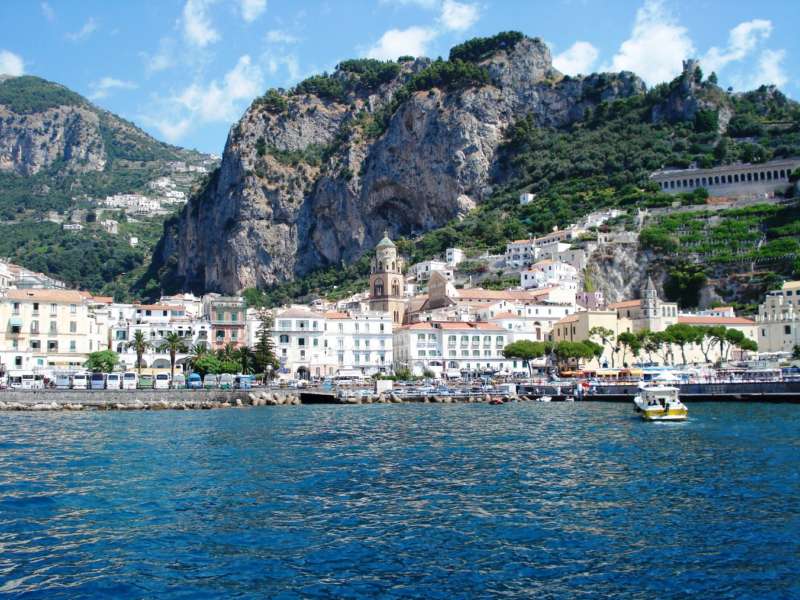
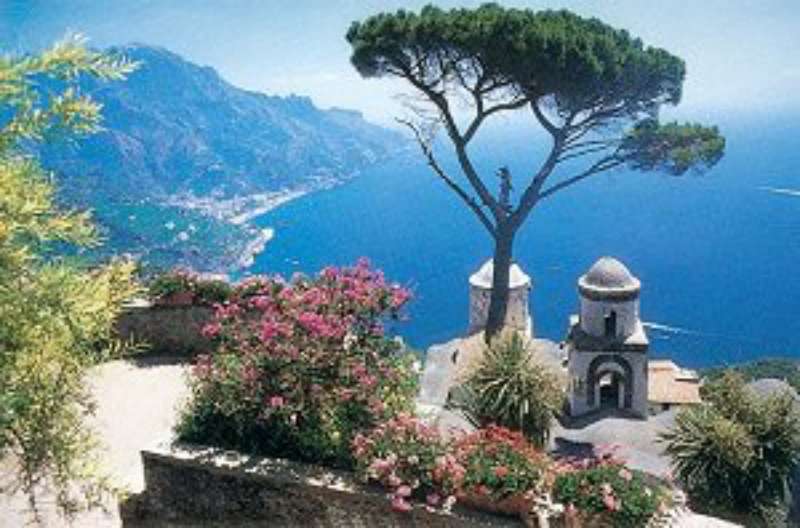
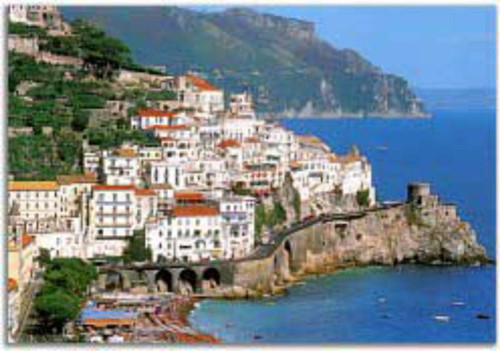
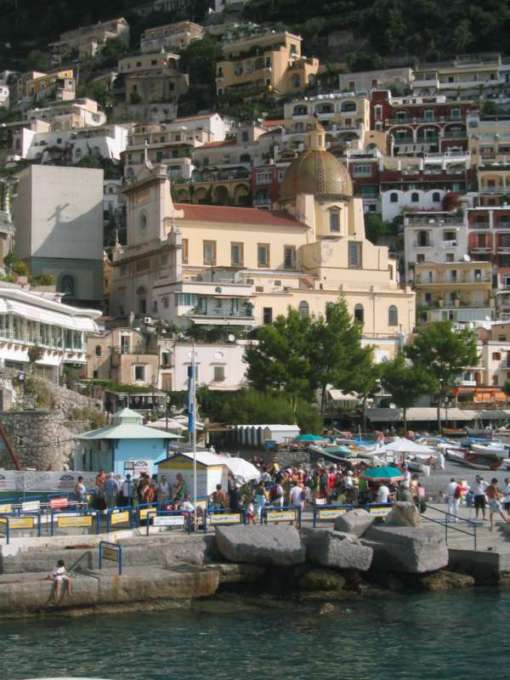
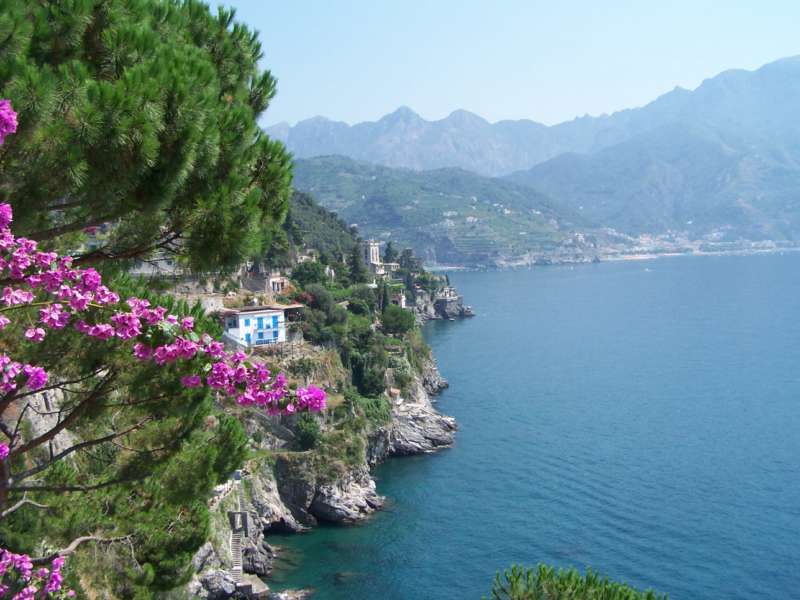
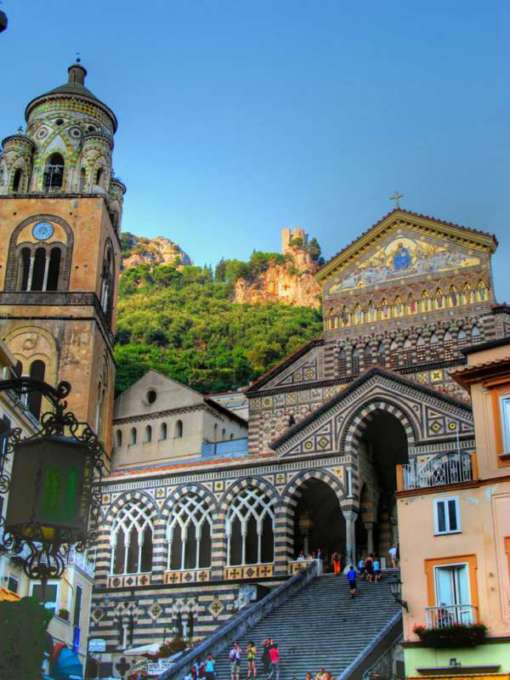
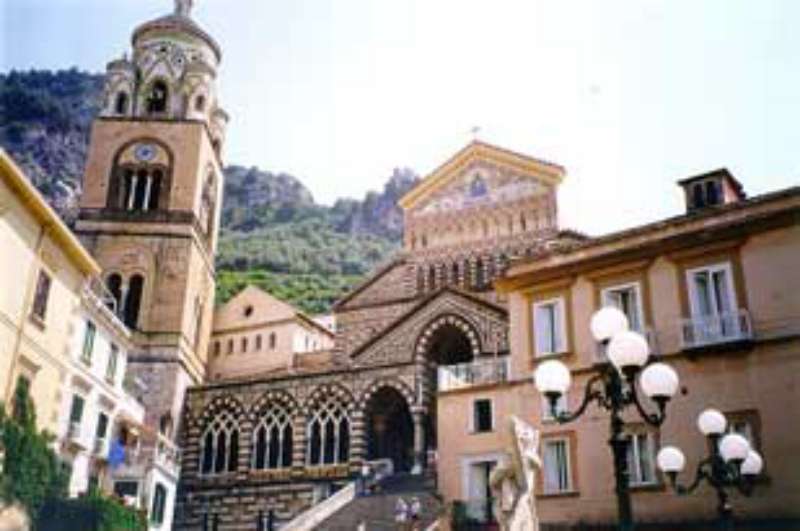
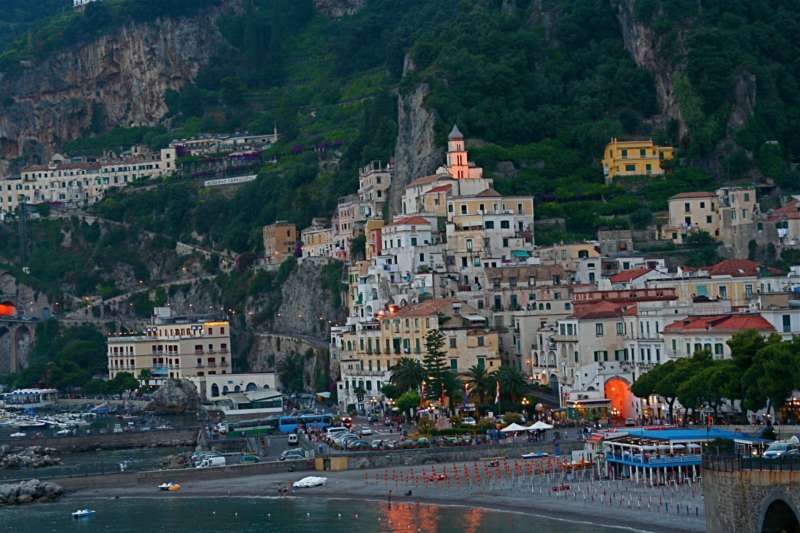
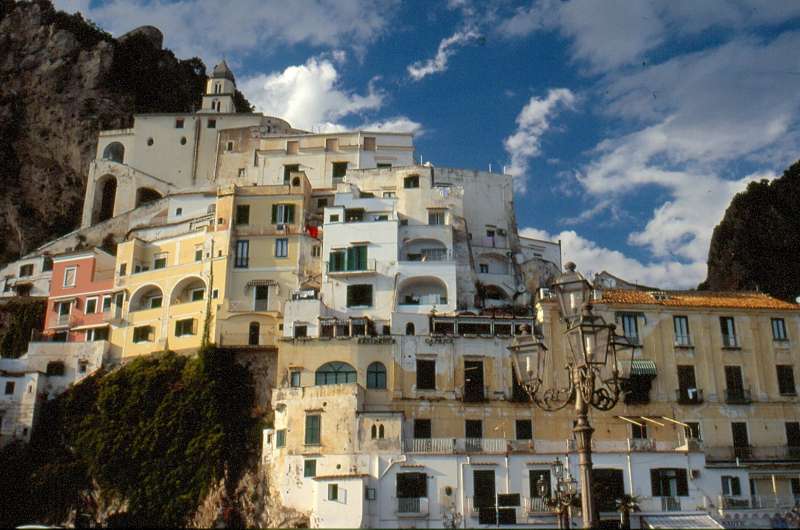
Set like an incomparable gem in a precious diadem, Amalfi gently overlooks the sea with its villages scattered along the coast and the typical houses clinging to the rocks bewitching every visitor. Nowhere do colours shine with such different, clear tones as on the Amalfi Coast, attracting thousands of visitors even of the greatest prestige. Here everything becomes a representation of Amalfi's beauty: the earth rich in citrus groves, the sea with the most incredible shades of blue and green, the enchanting beaches, the little islands. It's villages seem clumps of white, pink and yellow cottages gathered round the tiny harbours. They also lay on the rocks overlooking the wonderful Mediterranean with their narrow alleys in webs of arches, covered passageway and old towers that dominate the resort. Another great characteristic of this town hosts is the traditional art of hospitality and warmth it's people, the "Amalfitanis", have with everybody. This quiet and picturesque seaside resort enjoys a temperate climate and some of the oldest hotels in Italy as well as many modern ones. Situated at the outlet of Valle dei Mulini, this town's charm not only lies in the breathtaking views, incomparable natural beauties and typical villages but also in the historic buildings such as some of the finest churches, villas and monasteries it has gathered from the various dynasties that once dominated here. The Duomo was built about the 6th century and dedicated to St Andrew the Apostle whose remains are kept in the crypt. Its present façade, brilliant with mosaics, is in Oriental style; its bronze doors, the first ones to appear in Italy, were given to Amalfi by Pantaleone di Mauro Comite, a noble man from Amalfi, who melted them in the 11th century in Constantinople where he lived and led the Imperial Party. The Cloister of Paradise set beside the Duomo was built the 13th century in Arabian style and holds ancient sarcophagus', marble sculptures and mosaics. The art and architectonic value of its monuments, the indescribable beauty of the landscape and the folklore of its traditions made and still make it an incomparable resort. Through all the natural and historic beauties that cover this wonderful town of the Amalfi Coast, don't miss out on the: The Regatta The idea of an historical festival which could evoke the shining exploits from the epoch of the Ancient Italian Maritime Republics, was independently thought of by two enthusiasts, Mirro Chiaverini of Pisa and Francesco Amodio of Amalfi, at the end of the 1940's just after the second World War.The official charter for the race was instituted by the Regatta Board of the four Maritime Republics in Amalfi on December 10, 1955. From then on, every year, the festival, which consist of an historical parade and a rowing contest run over a straight 2000 meter long course, takes place in turn in one of the four Ancient Maritime Republics: Amalfi, Pisa, Genoa, Venice... The hulls of the ships are painted, according to the traditional colours of the four maritime cities. Each boat has its republic's flag hanging at its stern, and a figurehead at its prow. Curiously, Venice boasts the highest number of victories, while Amalfi won in '95, '96, '97. This very charming manifestation also provides for a fashion parade of period costumes and ends with spectacular fireworks which are particularly beautiful in Amalfi Coast, where they are symbol of a great tradition. In Amalfi the race begins from Cape Vettica, from a promontory which contains a sixteenth century vice-regal tower. The journey continues along the sinuous western coast to its end in Amalfi; here, the finish line is set in front of the Great Marina with the suggestive setting of Mount Aureo with the Ziro Tower, St. Lawrence of the Plain (a former monastery), the Cape Cross Quarter and the former convent and Tower of St. Francis in the background. Amalfi was originally founded by the Romans dating back to the 4th century a.C., and was the first Sea Republic of Italy. After the fall of the Roman Empire, Amalfi imposed itself as Maritime Republic in the early Middle Ages and became famous for it's diplomatic relations, that made it "rich and affluent" all over the Mediterranean basin. This was in fact the first city to re-establish relationships between East and West, transporting and introducing into Italy from the Arabian and Byzantine worlds, exotic merchandise such as carpets, coffee and paper. It also had it's own coin called the "Tarì". Sitting so beautifully on the rocks, Amalfi was the home of Flavio Gioia, who invented the compass and gave navigators the famous "Tabula de Amalpha" the first maritime code and law. In 1112, Amalfi founded an imposing hospital in Jerusalem which could contain 2000 beds and, thanks to Brother Gerardo Sasso from Scala, gave birth to the first military and religious Order called at first the "Knights of St.John", then the "Knights of Cyprus", of Rhodes and finally, in 1530, the "Knights of Malta", still existing today. The Knights fought repeatedly against the Saracens and, in 849, they defended Rome and the Church in the famous battle of Ostia. You may consider staying in the area between Maratea and Diamante central to the whole of the South Italy, so please check the availability below and book a Hotel accommodation by the sea or in the beutiful rural area and center point for other major South Italy destinations within a few hours of relaxing, discovering car drive. Distances to the Amalfi Coast approx. Check Hotel Accommodation availability and book in these towns:
|
||||||||||||||||||||