



|
|
|
RAVELLO - AMALFI COAST - CAMPANIA - SOUTH ITALY MUSICAL FESTIVAL VISIT & SEE HISTORY Ravello and the Amalfi Coast are some of the most important visiting tourist resort of the South Italy, attracting many visitors every year from worldwide nations like United States, Japan & Europe. 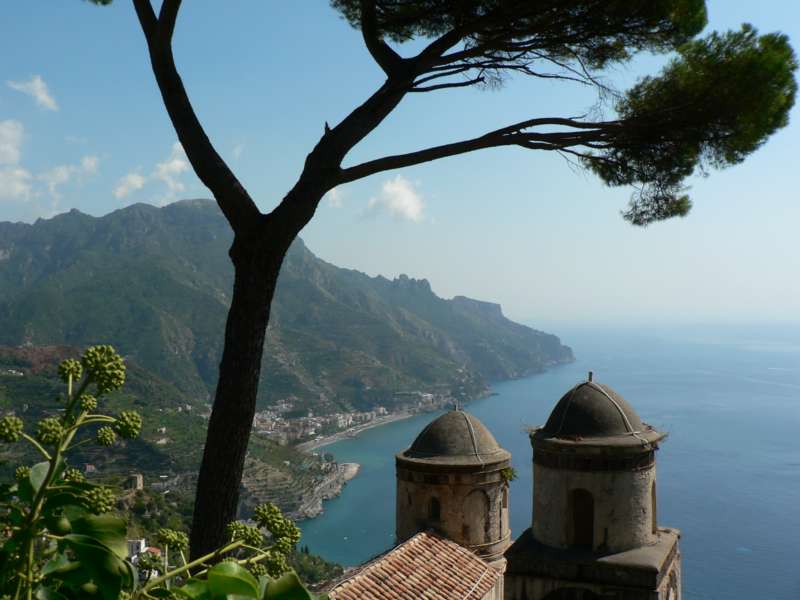

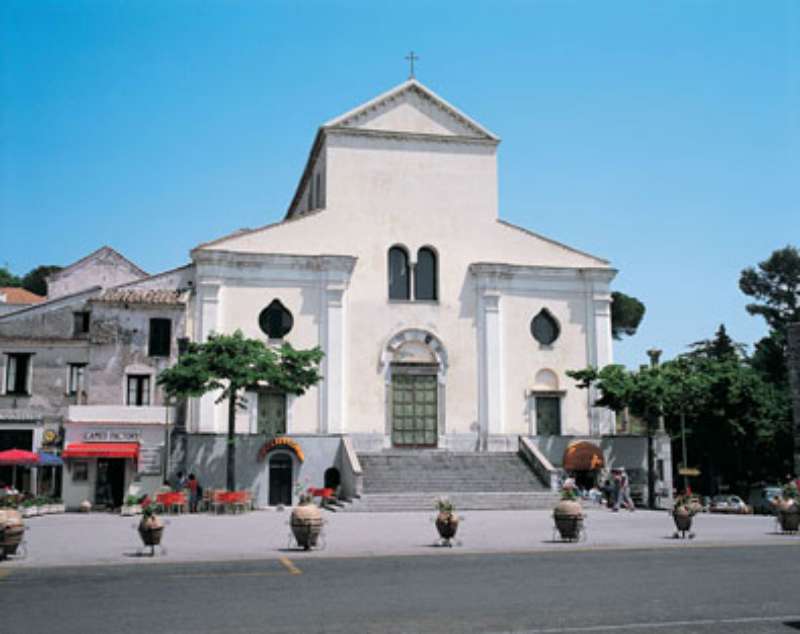
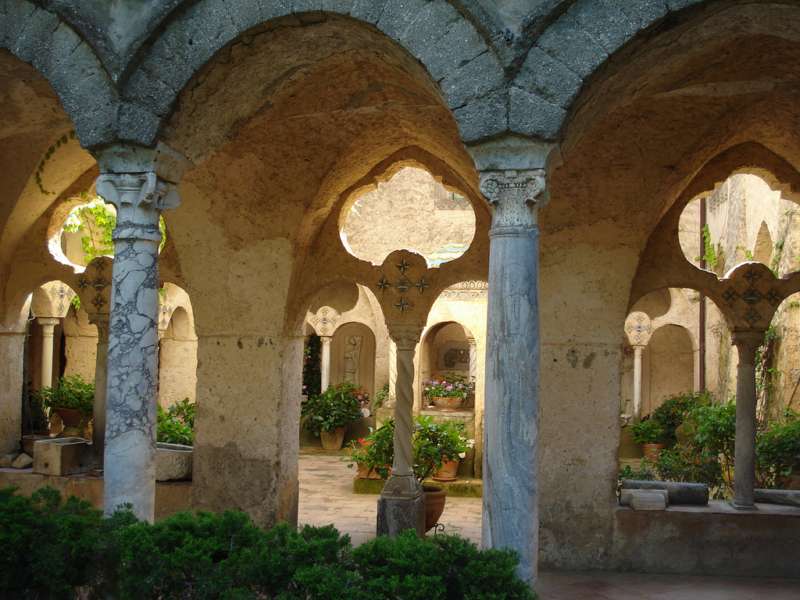
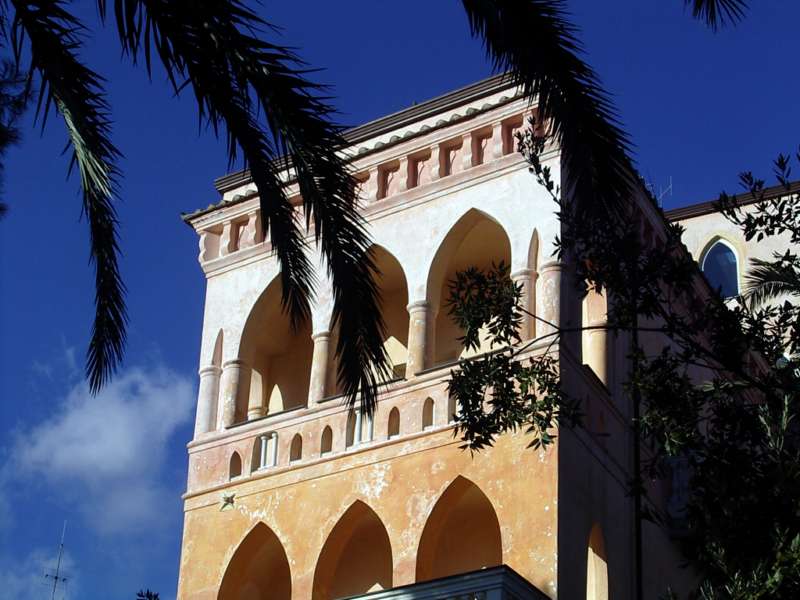
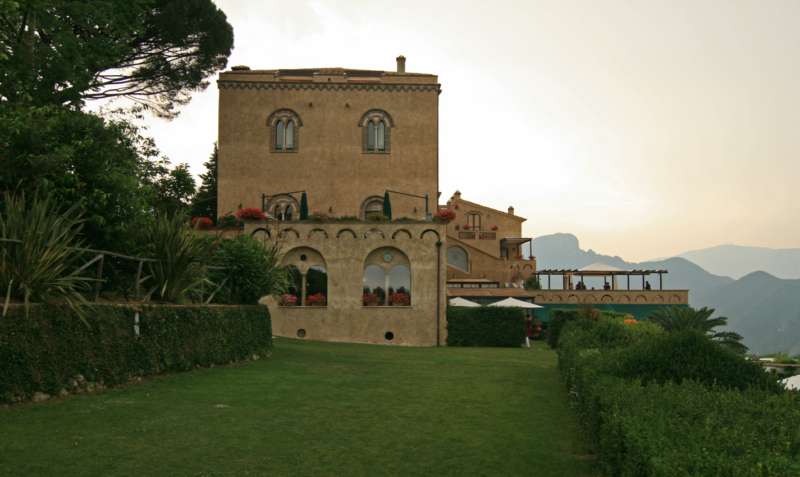
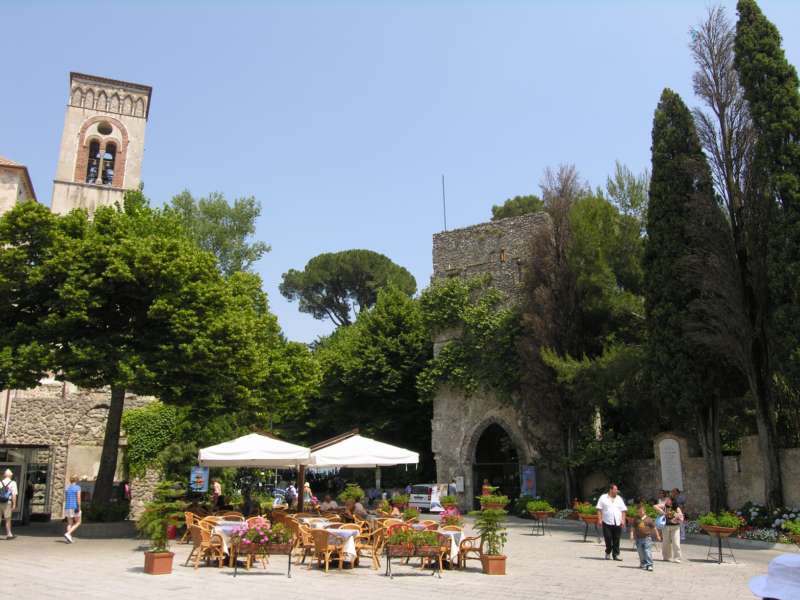
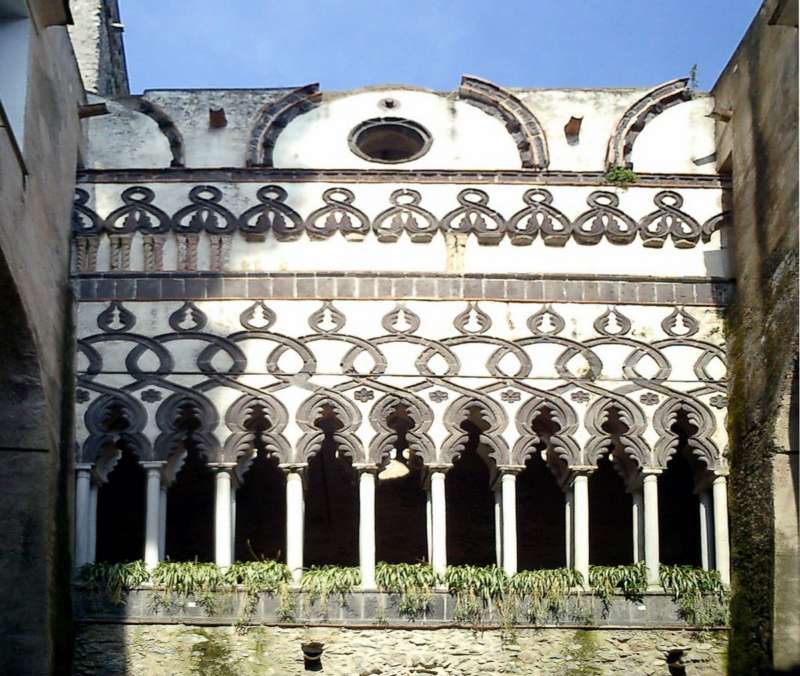
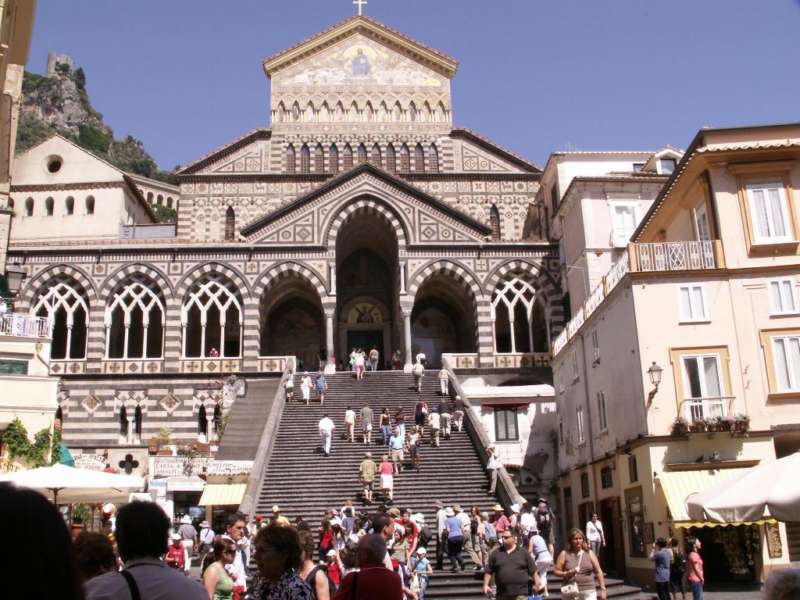
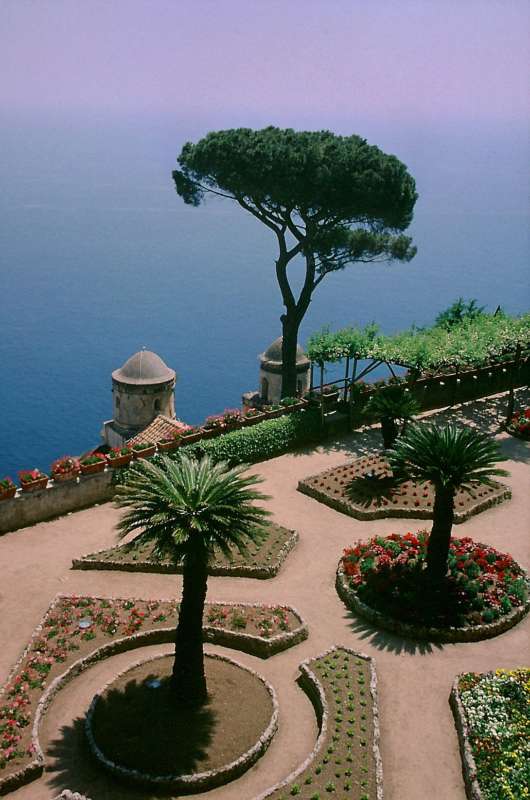
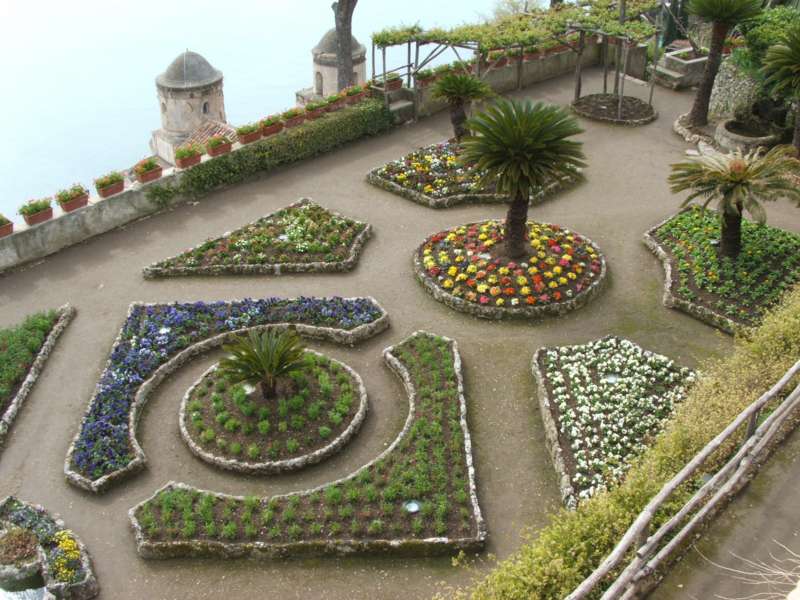
Ravello, exceptional theatre stalls in a breathtaking posture for a natural spectacle. Located on a rocky spur astride the Dragon's and Regina's Valleys it offers to all it's visitors the relaxing panoramas from it's natural terraces and gardens. It is situated in a more elevated position than the other pearls of the Amalfi Coast and boasts exceptional landscapes full of green and colourful flowers that embrace one's soul. This is the location among all the pearls of the Amalfi Coast that many famous ones have chosen in past and still in present to visit and stay like Greta Garbo, who came here with her lover Leopold Stokowski, as inscribed on a plaque at the entrance of the avenue of one of its beautiful Villas, and D. H. Lawrence, author of "Lady Chatterley's lover", as also Jacqueline Kennedy before the tragedy. It's beauty and charm have also been so worthy to capture the attention of one of the greatest Italian Authors of all time, G.Boccaccio, who quotes this beautiful location in a novel of his Decameron, describing it like this "Scarce any part of Italy is reputed so delectable as the sea coast between Reggio and Gaeta; ... one of which towns, to wit, Ravello". Introducing one of his characters " ...here many rich men live; one of these was extremely rich and his name is Landolfo Rufolo". Painters, musicians, writers have passed on their vision of this town who's natural terrace, surrounded by the colourful shades of the flowers, that overlooks the blue Mediterranean and exhibits such a breathtaking scenery and view, also becomes theatre for artistic performances. Ravello has become known in time as a The City of Music, that hosts the most famous and renowned Wagnerian Festival among the so many performances of different kinds of music. This same, most natural stage, in fact has also hosted contemporary artists like the Italian Battiato. Ravello, so splendidly located on the Amalfi Coast, has also an imposing hystorical and cultural character. Just need to mention that it's Villa Episcopio, was general head quarters of the hystorical Vittorio Emanuele III when he escaped from Rome, also Ravello is the home of the European University Centre for Cultural Heritage. This is a cultural board that promotes cooperation and exchange between Europe and the countries on the Mediterranean basin. An experience that Ravello has been living for centuries, thanks to close contacts since ancient times with both the Arab and Byzantine worlds. Undoubtedly, this coastal town has so many characters to make a wonderful stay offering not only natural beauties but also it's artistic and cultural heritage, wonderful climate, great musical events. Ravello Musical City - Wagner Festival in Ravello Ravello has so many musical manifestations that give origin to it's description "The City of Music". It's concert season is quite long, commencing in March going right through until November, with a full calendar of programmes.It is has now become a much appreciated habit that Ravello holds its concerts in the most beautiful sites nearby, the usual and most magnificent Villa Rufolo, like the Duomo Square that is each summer between July and September, made into a some kind of "drawing room" that offers excellent live music. Among the so many musical performances you can find the, undoubtedly unusual, Dawn Concerts. They are performed around the moment when night gives way to day, usually scheduled for 4 am. One of these types of Concerts cannot surely miss in the night of San Lorenzo which is the night that makes dreams come true...if you can spot a falling star in the sky, just make your wish and wait for Saint Lorenz's gift. The town has over the years, opened up innovative stylistic impulses: from the use of literary texts written by contemporary authors, to making overtures to Arab and Jewish musical art from medieval Spain, to pop stars and jazz concerts. From the early 1950s, Ravello has been the home of the famous and celebrated Wagnerian Music Festival that is held every year in July. Villa Rufolo, with such stunning scenario, is the very same garden that enchanted Richard Wagner, who found in it his magical garden of Klingsor in the month of May on the 26th more than a century ago, in 1880. He was inspired by this Villa for the setting of the second act of one of his masterpieces "Parsifal", describing it "tropical vegetation, splendid, lush flowers.terraces, projections of the castle itself, in a rich Arabian style.", as he himself wrote. The Festival is, therefore, the celebration of a reciprocal passion between the great composer and lush vegetation that surrounds the ancient residence. Ravello has many many views and scenarios to enjoy and admire, to make you gaze and relax to mother nature's beauties, just like the ones it's wonderful Villas have to offer. As well as it's beautiful natural heritage there are many hystorical and artistic remains to see. Among the numerous churches in Ravello, undoubtedly the Cathedral and Chiesa del Toro, as well as the famous S. Francesco cloister. Orso Pavicio, the first bishop of Ravello, ordered the construction of the Cathedral. The building began in 1087 and went on for many years with integrative and additional interventions aimed at increasing decoration splendour. The last remarkable intervention occurred in 1786; recently a restoration aimed at recovering the original parts of the sacred building has been begun. The unadorned front has been restored many times. However some original elements, such as a million window with two lights, three eyes and four columns of the ancient pronaos, destroyed by an earthquake, remain. The marble portal and the bronze door of 1179 are very beautiful. The door is composed of 54 panels, built by Barisano da Trani, where he portrayed Passion scenes, and scenes of saints and warriors, one of which grasps a characteristic oriental arch in confirmation of the Byzantium influence still exerted in Italy in that time. The inside is magnificently decorated. In the centre, there is a marble pulpit of 1200, built by Niccolo di Bartolomeo from Foggia who also made the woman's head, a sculpture of Sigilgaita, the wife of Nicola Rufolo, the generous patron who commissioned the pulpit to the Apulian artist. Today this sculpture is in the Museum annexed to the Cathedral that also deserves a visit. In front of the pulpit, we can admire an ambo richly decorated by mosaics, commissioned by another bishop of Ravello, Costantino Rogadeo. The mosaics describe Giona's myth, who was swallowed and spit out again by Pistrice, a monstrous animal. On the left of the high altar there is the chapel of S. Pantaleone, to whom the Cathedral is dedicated. Here the Saint's relics and a reliquary containing his blood are preserved. According to the tradition every year his blood liquefies on July 27th in the anniversary of his martyrdom , which took place in 305. The Church of S. Giovanni del Toro was built in the 12th century and was subsequently restored several times over. In the inside, there is a 12th century pulpit, commissioned by the rich family Bovio from Ravello and built by Alfano da Termoli. Similar to the one preserved in the Cathedral, it is decorated by mosaics portraying Giona and Pistrice. The crypt hosts 14th century frescoes. Furthermore, an interesting 13th century cloister is annexed to the Church of S. Francesco. The builder of Villa Cimbrone was inspired by this cloister and reproduced it inside its gardens. Villa Rufolo is very ancient, it was built approximately in 1280 by the homonymous family, one of the richest and most important families in Ravello. Even though it has been rearranged, the building still completely expresses an interesting Arabian-Norman style. Through a luxuriant garden, which is steeper and wilder than the well arranged and elegant gardens of Villa Cimbrone, you reach the "roof-gardens" hanging over the sea. A natural terrace, surrounded by the colourful shades of the flowers, that overlooks the blue Mediterranean and exhibits such a breathtaking scenery and view, that also becomes theatre for artistic performances. It is here, that every year the Wagnerian Festival is celebrated as a memento of Richard Wagner's stay. Apart from the musical quality, that is exceptional, the audience is enchanted to see the orchestra that plays as if it were suspended half-way up on a uniformly blue setting, represented by sky and sea. This is the so called Klingsor's Tower, traditionally named this way as by Richard Wagner's description of it in his Parsifal. In fact it was Villa Rufolo's splendid gardens that inspired the very famous Klingsor's garden which played a great role in the German culture and imagination in the twentieth century. As matter of fact, subsequently Mann, Hess and other writers will refer to it. The architectonic pattern of arches is very much present on the Coast and above all in Ravello. We have both lancet arches with three-lobed columns in the Arabian tradition, or arches with a short curve, of Byzantine or going further back, of Roman origin. However, there are elements that are present in almost all the monuments of Ravello's glorious and rich past. On the other hand even in nature, due to wind and sea erosion, this architectonic element is present: along the entire Coast there are, in fact, many natural arches both along coasts and inside steep gorges. Villa Cimbrone, elegant and well arranged gardens, was built in the twentieth century and was commissioned by the English nobleman William Bechett. This villa imitates classic and medieval styles and shapes. Also known as the "Terrace of Infinity" it is famous for its breathtaking Belvedere, from which one can admire "the most beautiful view in the world" as says Gore Vidal, honorary citizen of Ravello. Its celebrity is directly due to this "Terrace of infinity", that is really one of the most charming places on the Coast. The beauty of the Villa, however, consists in its gardens, decorated by statues, busts and marble groups. Among them, the temple in Doric style with the marble statue of Cerere; Bacchus's temple, with a bronze sculptural group and a reproduction of David by Vernocchio. In the cloister, just on the left of the entrance, there is a bas-relief reproducing the seven deadly sins. Founded probably in the 4th century a.C. by Roman populations escaping from barbarians. The writer Andre Gide has given us a splendid and synthetic description: "Ravello is nearer to the sky than it is to the shore". It already enjoyed a good economic development when it was part of the Amalfi Republic, but Ravello rebelled against the Republic when the Amalfi people betrayed the Norman king Roberto il Guiscardo in 1081, electing their own Doge. Ravello refused to follow the Amalfi people towards betrayal and deserved the appellation of Rebello, from which today its name still derives, by the Amalfi population. However, in that occasion, it had the support of Pope Vittorio III who firstly redeemed it from subordination to Amalfi, making it a bishop's palace and subsequently (1086) making it an Episcopal seat. It then became an economic power, seat of flourishing textile industries and as a result has left indirect testimonies in an elevated number of artistic treasures of churches and villas. The pillage of the people of Pisa in 1137, caused a slow decline that only broke off in the last century when Ravello became a preferred destination of the Grand Tour, educational and pleasure travels of European intellectuals and artists. You may consider staying in the area between Maratea and Diamante central to the whole of the South Italy, so please check the availability below and book a Hotel accommodation by the sea or in the beutiful rural area and center point for other major South Italy destinations within a few hours of relaxing, discovering car drive. Distances to the Amalfi Coast approx. Check Hotel Accommodation availability and book in these towns:
|
||||||||||||||||||||